
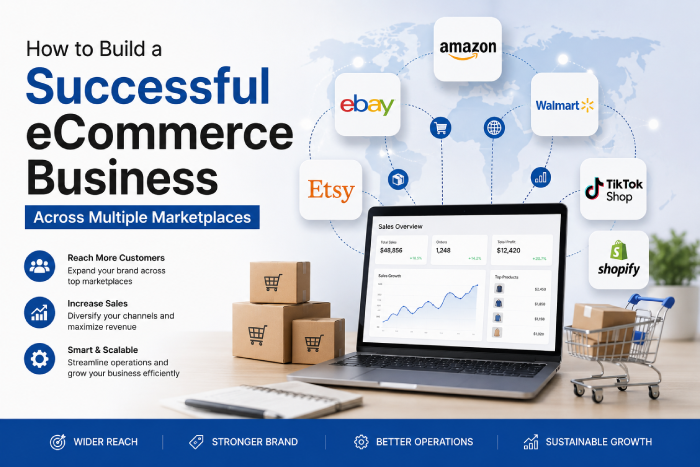
Building an eCommerce business today is no longer limited to having a single online store. Customers shop across Amazon, eBay, Walmart, Etsy, TikTok Shop, Shopify, and other platforms depending on what they need and how they prefer to buy. For online sellers, this creates a major opportunity to reach a larger audience and generate sales from multiple channels.
However, managing several marketplaces at the same time can also become challenging. Product listings need to remain accurate, inventory must be managed properly, customer expectations need to be met, and each platform has its own rules and requirements.
A successful multi-channel strategy starts with understanding your target customers. Instead of listing products everywhere without a clear plan, identify where your ideal customers are most active. For example, some products may perform well on Amazon because customers are actively searching for them, while visually appealing or handmade products may have stronger potential on Etsy or TikTok Shop.
Optimize Every Product Listing
One of the most important elements of marketplace success is a strong product listing. Your title should clearly explain what the product is and include relevant search terms naturally. Product descriptions should focus on benefits, features, use cases, and the problems the product solves.
High-quality images are equally important. Customers cannot physically examine a product online, so images need to provide enough information to help them make a confident purchasing decision.
Keep Inventory and Pricing Consistent
Selling across multiple channels requires careful inventory management. Overselling can lead to canceled orders, unhappy customers, and negative reviews.
Businesses should establish a reliable process for tracking inventory and updating product information across platforms. Pricing should also be reviewed regularly to account for marketplace fees, shipping costs, promotions, and competitor activity.
Focus on Customer Experience
Great products alone do not guarantee long-term success. Fast communication, accurate descriptions, reliable shipping, and professional customer support can significantly influence reviews and repeat purchases.
Positive reviews help establish trust and can also improve how customers perceive your brand.
Use Data to Make Better Decisions
One advantage of selling across multiple platforms is access to valuable business data. Sales, conversion rates, traffic, customer behavior, and product performance can help identify what is working and what needs improvement.
Instead of relying on assumptions, use this information to decide which products deserve more attention, which marketplaces are producing the best results, and where your marketing efforts should be focused.
Build a Brand, Not Just a Store
Marketplace selling can generate revenue, but building a recognizable brand creates long-term value. Consistent branding, professional product presentation, quality customer service, and a strong online presence can help customers remember your business.
A successful eCommerce strategy combines marketplace visibility with brand building. When these elements work together, businesses can create a stronger foundation for sustainable growth.